
Last week I wrote about the journey a piece of furniture takes to a home. Today I want to show something that is created at the end of my own journey — in the studio.
It began with a question that would not leave me alone for a long time: why is the light from most lamps so flat? It shines, certainly. But it is not alive. I was looking for a material that would not merely transmit light, but play with it.
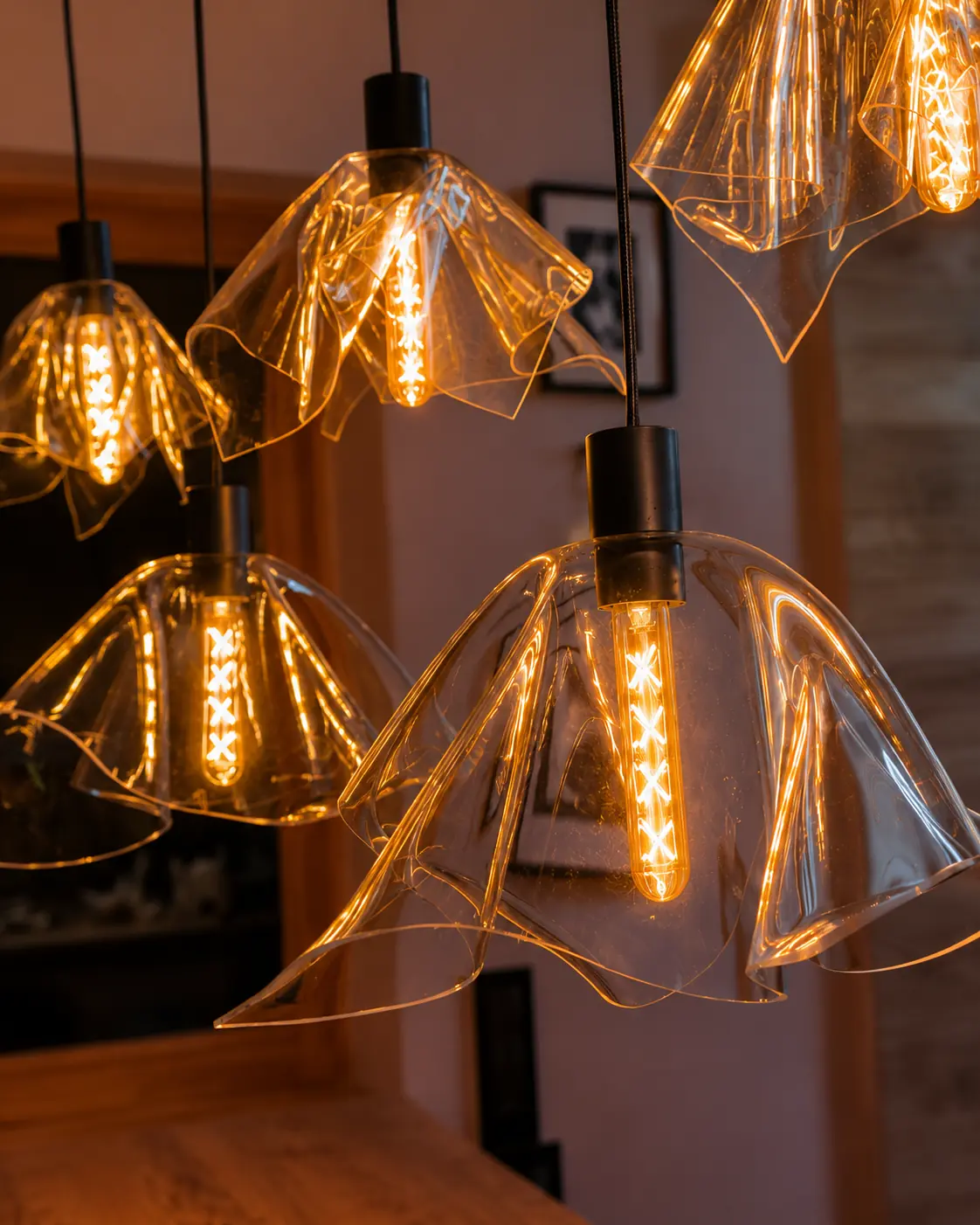
I found it in PMMA acrylic glass. It is an optical material — the same kind of material used to make lenses. It transmits more light than ordinary glass and does something with it that no frosted shade can: it guides it along the form, refracts it at the edges and distributes it softly across the wall. Light ceases to be a point. It becomes movement.
And that is where the name of the series comes from — FLOW. I form each shade by hand, so each one sets in a slightly different gesture. Two lamps from the same series are never identical — and I consider that their value, not a flaw. In a world where everything is cast in thousands of identical copies, the hand leaves a mark that cannot be imitated.
The first series is already taking shape. It will be limited and numbered — but I will tell that story separately, because it is a longer one.
And one final question: do you ever notice how much the light from a lamp changes the atmosphere of a room — more than the colour of the walls itself?
You can read the full text here without an account. The conversation around this topic also continues on LinkedIn.
Join the conversation on LinkedIn →