
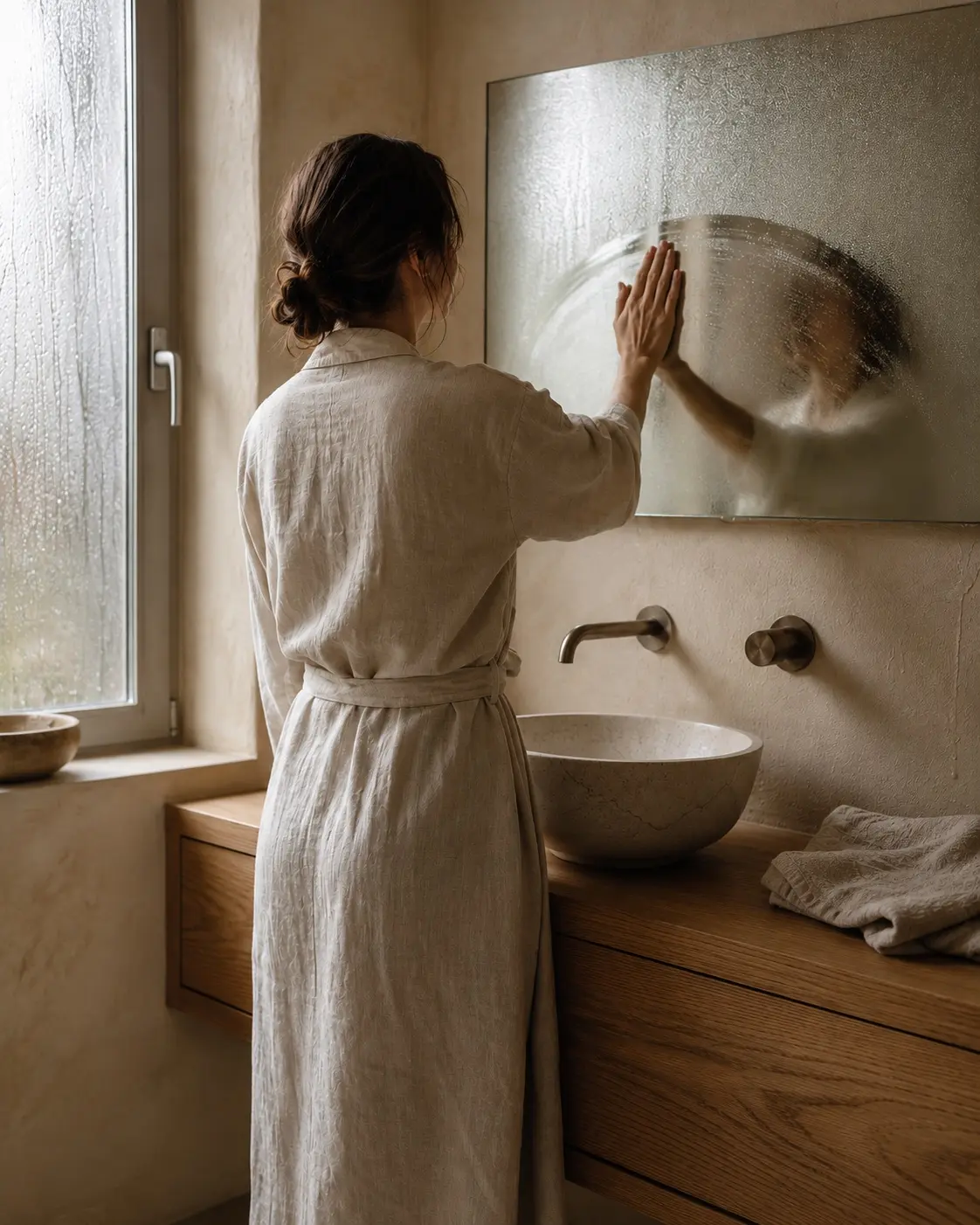
I promised a piece about damp. And this is where the evidence is especially strong.
The World Health Organization has devoted separate guidelines to damp and mould. The conclusions are unequivocal: living in damp buildings is associated with respiratory disease, asthma and allergies—and this also applies to mould that cannot be seen, hidden behind furniture and beneath windowsills. This is not about the appearance of a wall. It is about what we breathe for eight hours while we sleep.
Where does it come from? From life. Cooking, drying laundry indoors, showering, breathing—a family of four releases several litres of water into the air every day. That water has to escape somewhere. If it has no way out, it will find the coldest surface and settle there.
What can you do today? Air rooms briefly and intensively, especially after cooking and bathing. Do not dry laundry in the bedroom—and if there is no alternative, keep the window open. Move wardrobes a few centimetres away from cold external walls so that air can circulate. And every so often, look where no one usually looks: behind the headboard, beneath the windowsill, in the corner by the floor.
Today’s question: when did you last move a large wardrobe away from the wall—and what did you find there?
Next Thursday: what “new” smells like—and why furniture has an exhalation of its own.
*Source: WHO Guidelines for Indoor Air Quality: Dampness and Mould (World Health Organization, Regional Office for Europe, 2009) and WHO Housing and Health Guidelines (2018).
*Illustration: AI visualisation.
What affects us
Space affects us even when we do not consciously notice it. In this series we look at how light, air, noise, temperature, humidity, materials and contact with nature influence how we feel and function — drawing on research and verified sources.
See all texts in the Journal →