
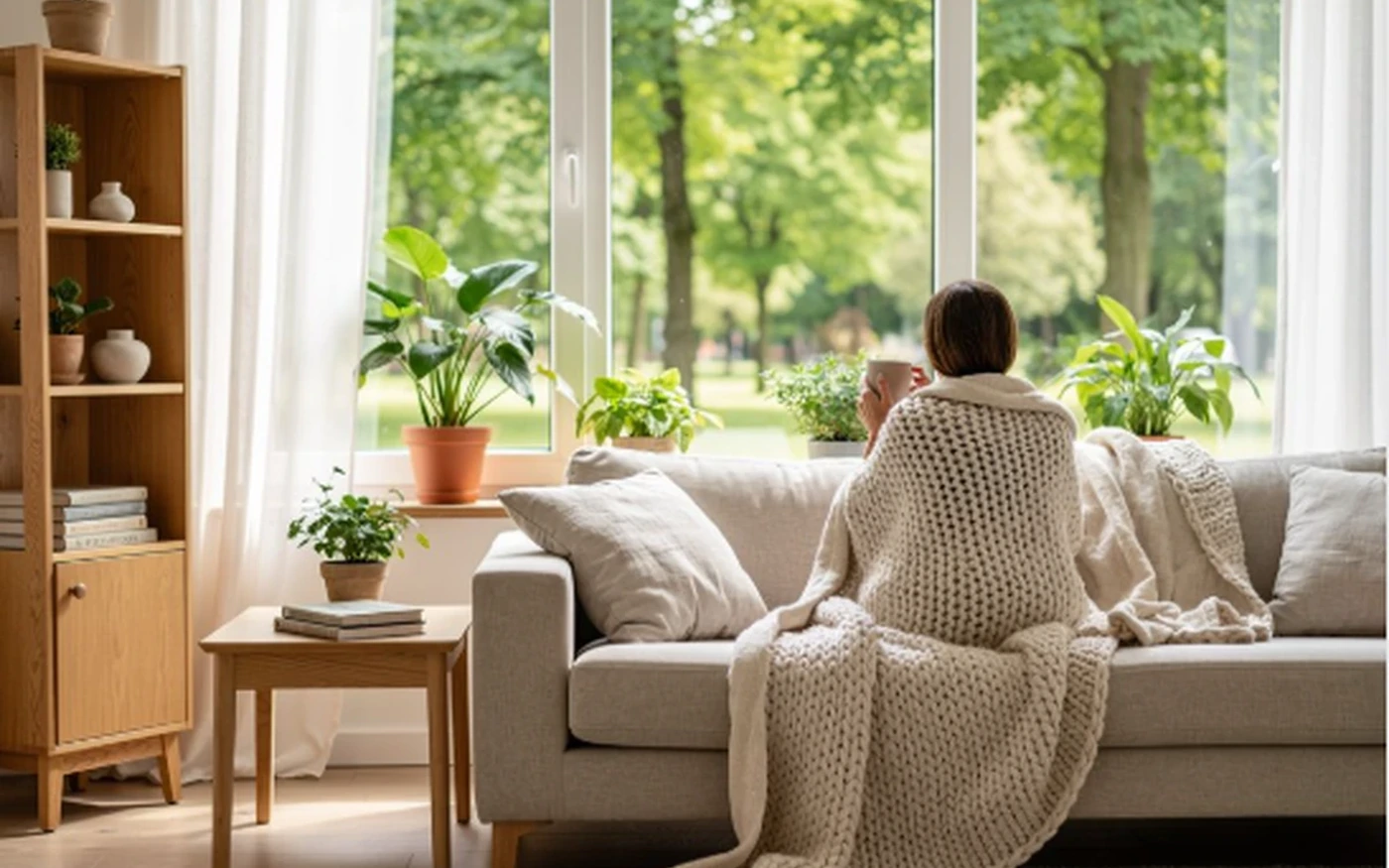
For many years, while accompanying my partner in the property sector, I entered many homes. Somewhere along the way I noticed something I could no longer unsee: there are homes where people want to live, and others that quietly drain their strength. The floor area was often the same. The price similar. Yet the difference was enormous.
I searched for a long time for words to describe what I was seeing. Today I know: an interior does not merely look a certain way. An interior acts — and the relationship works both ways. Sharing life with someone close to me who has hearing loss, and discovering the world alongside her, I experienced how some interiors could calm her while others overstimulated her emotions. When one sense works differently, space speaks to us even more loudly.
Design in Europe is being born from that conviction — a brand I am now building. I create original interior projects whose primary aim is the wellbeing of their users, and I seek to shorten the route between European manufacturers and Polish homes. I also run a craft studio where lamps inspired by movement are made — the FLOW series will premiere soon.
I want to share what I have learned and what I am still learning. I am beginning a series called “What affects us”: about what science knows regarding the influence of space on people. No fearmongering and no miraculous promises. Instead, verified sources and scientific research — together with questions worth asking within our own four walls.
The first question comes on Thursday. It will be about light.
What affects us
Space affects us even when we do not consciously notice it. In this series we look at how light, air, noise, temperature, humidity, materials and contact with nature influence how we feel and function — drawing on research and verified sources.
See all texts in the Journal →